Blog
VIN Check Before vs After Purchase: Why It Matters
Running a VIN check after you’ve already bought the car is too late. Here’s why timing your vehicle history check correctly can save you thousands of euros.
What you'll read:
There is a version of vehicle due diligence that feels thorough but provides almost no actual protection. It looks like this: you find a car you like, you negotiate a price, you sign the purchase agreement, you transfer the money, and then you run a VIN check to confirm everything is in order. This sequence is more common than you might think, and it is almost entirely useless from a risk management perspective.
A VIN check run after a purchase has been completed and paid for tells you things you can no longer act on. It might confirm that the vehicle is exactly what the seller said it was, in which case the check was redundant. Or it might reveal that the odometer was wound back, the vehicle was previously written off, or the mileage history has a three-year gap that the seller conveniently forgot to mention. In either case, you already own the car and your legal options for recourse are expensive, time-consuming, and uncertain.
The entire value of a VIN check is contingent on running it before any binding commitment is made. Here is why timing transforms the same piece of information from irrelevant confirmation to genuine financial protection.
The Negotiation Window Is Everything
When you run a VIN check before negotiating, you are holding a tool. When you run it after signing, you are holding a record.
A history report that reveals a recorded accident, an odometer discrepancy, or a previous total loss designation gives you concrete, documented leverage to negotiate a lower price or walk away entirely. The seller either needs to justify the issue to your satisfaction, reduce the price to reflect the risk, or lose the sale. You are in control of the transaction.
The same report, run after payment has been transferred, gives you the basis for a legal dispute with a seller who has your money and no particular incentive to cooperate. Even in jurisdictions with strong consumer protection laws, pursuing a seller for misrepresentation requires time, legal costs, and a tolerance for uncertainty. The probability of recovering your full losses is significantly lower than the probability of having avoided the problem entirely by running the check before paying.
Using VIN Checks to Screen Multiple Candidates Efficiently
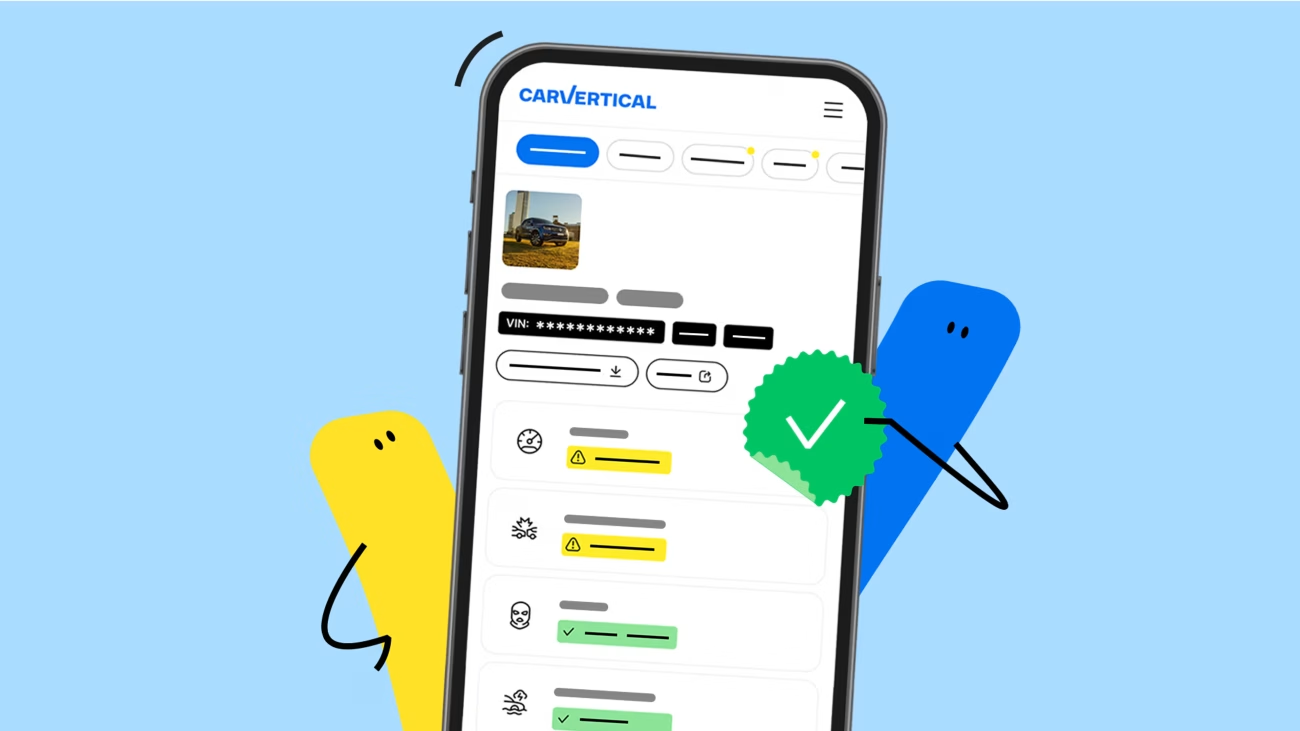
One of the most practical uses of a pre-purchase VIN check is screening a shortlist of vehicles before committing time and travel costs to physical inspections. If you are considering four or five vehicles across different cities or even different countries, driving to inspect each one sequentially is expensive and time-consuming. Running a VIN check on each candidate first creates an evidence-based shortlist of vehicles worth inspecting physically.
A candidate that returns a clean check, consistent mileage, single-country history, and confirmed COC availability is worth the travel. A candidate that returns a recorded total loss, a three-country registration history in two years, and an unexplained mileage gap is not, regardless of how attractive the listing photos looked or how confident the seller sounded on the phone.
At coc-auto.eu, this screening process is cost-effective because the CarVertical reports available through the platform are priced lower than through direct ordering. Running four pre-inspection checks costs less than it would direct, and the candidates that do not pass the check are eliminated before you spend anything on travel, inspection fees, or further due diligence.
The Specific Risk of Cross-Border Purchases
For buyers purchasing vehicles from other EU countries, the timing of a VIN check matters even more than for domestic purchases. Cross-border transactions involve additional friction at every stage: travel costs, language barriers, less familiarity with local market conventions, and reduced ability to verify seller claims through personal networks or local knowledge.
A seller in Germany who misrepresents a vehicle’s accident history is significantly harder to pursue legally from Poland, Hungary, or Bulgaria than a local seller would be. The practical barriers to cross-border legal action are high enough that the cost-benefit calculation for pursuing recourse after a problematic purchase is often negative. Prevention is the only strategy that reliably works.
For cross-border purchases specifically, running a full CarVertical report before making any financial commitment or travel arrangement is not optional due diligence. It is the minimum sensible precaution. The multi-country data aggregation that CarVertical provides is particularly valuable for vehicles that have moved across EU borders, where national databases give an incomplete picture of the vehicle’s full history.
What to Do With the Report Before You Negotiate
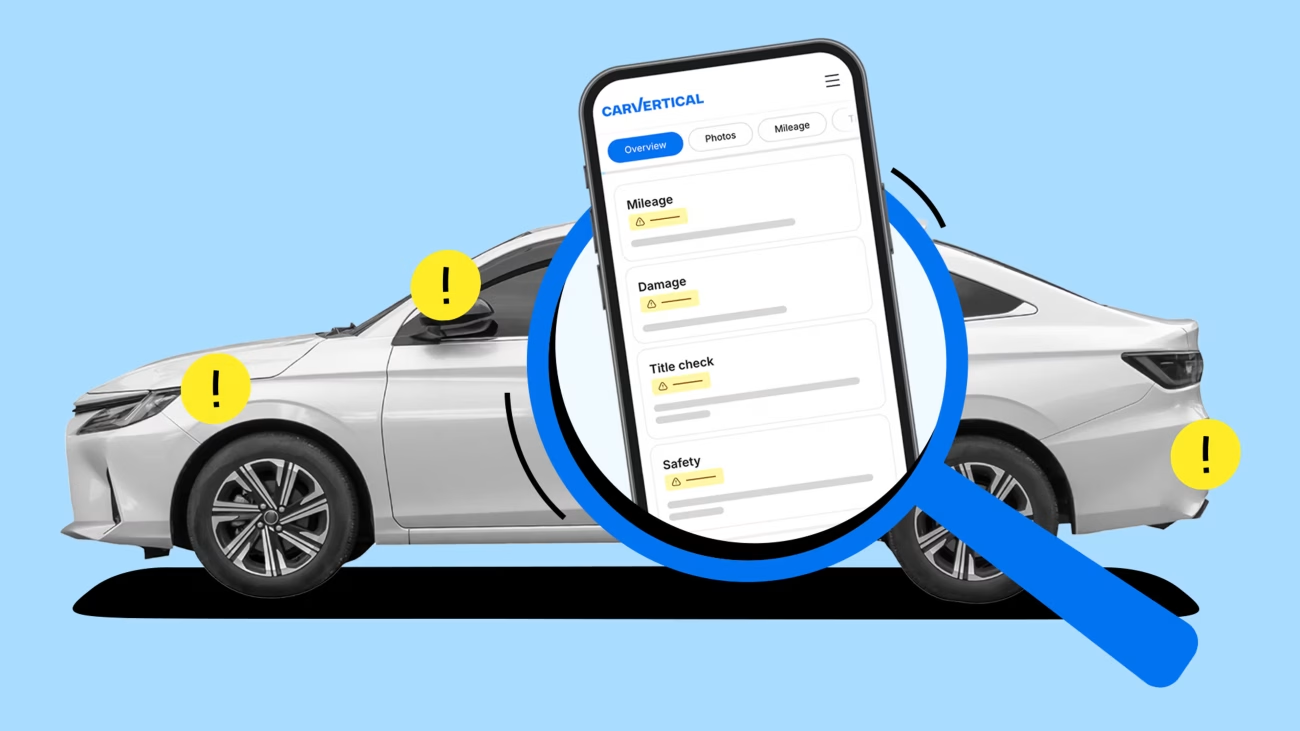
Running the check is only the first step. Using the information it contains effectively requires understanding what each finding means and how to apply it in the buying context.
A report that shows consistent, progressive mileage with no gaps across multiple inspection records, single-country registration history, no accident records, and original ownership documentation is a strong positive signal. It does not guarantee the vehicle is perfect, but it eliminates the most common categories of deliberate misrepresentation. Use it to negotiate from a position of reasonable confidence while still insisting on a physical inspection.
A report that shows an odometer reading that appears lower than a reading from two years earlier is a clear fraud signal. No legitimate explanation exists for a vehicle that shows fewer kilometres now than it did two years ago. Walk away.
A report that shows a gap of two or more years with no recorded mileage data points is a yellow flag rather than a red one. It requires explanation. Ask the seller directly what happened to the vehicle during those years and request any supporting documentation from that period. If the explanation is plausible and supported by documents, the gap may be acceptable. If the seller has no explanation or becomes evasive, the gap is more significant than it might initially appear.
A report that shows a previous registration in a country not mentioned by the seller, or a registration count that exceeds the number of owners the seller described, is worth probing. It is not automatically disqualifying but it is a discrepancy that deserves a direct explanation before you proceed.
Get a Full carVertical Report
The same comprehensive data. A better price — exclusively through COC-Auto.
€29.99
€19.99
SAVE €10
Accidents • Mileage fraud • Theft • Finance • Write-offs • Full history
Check Your VIN Now →
The Post-Purchase Check: When It Is Actually Useful
There is one scenario where a post-purchase VIN check provides genuine value: when you are the seller rather than the buyer. Before listing a vehicle for sale, running a report on your own car tells you what a prospective buyer will discover when they run their own check. If there are records you were unaware of, such as an insurance claim made by a previous owner that you never knew about, you have the opportunity to understand and account for these in your pricing and disclosure rather than having them emerge as a surprise during buyer negotiations.
For sellers, the pre-listing check is a tool for realistic pricing and transparent disclosure. For buyers, it is a protection mechanism. In both cases, the check produces its value before the transaction, not after it.
Frequently Asked Questions
As early as possible in the evaluation process, certainly before any physical inspection trip or deposit payment. Running the check at the point of initial serious interest gives you the information before you have any financial or emotional commitment to the vehicle.
Yes, and this is one of the most practical uses of a pre-purchase report. Any negative finding in the history report is a documented basis for price negotiation. Even the absence of certain records can be used to negotiate if the seller has made claims the report does not support.
Your options depend on the jurisdiction and the nature of the misrepresentation. Consumer protection laws in EU member states provide some recourse for deliberate misrepresentation, but pursuing it is time-consuming and expensive. Prevention through a pre-purchase check is a significantly better outcome than post-purchase legal action.
Yes. The data and report format are identical. coc-auto.eu provides access to the same CarVertical database at a lower price than direct ordering, with no reduction in data quality or report completeness.
Yes. Dealers occasionally sell vehicles with undisclosed history, and in some cases they genuinely do not know the full history of every vehicle on their forecourt. A VIN check protects you regardless of whether the seller is a private individual or a commercial entity.
It can, particularly if you are evaluating many candidates. Using coc-auto.eu for CarVertical reports at the discounted price reduces this cost meaningfully compared to direct ordering, making it more practical to screen multiple candidates thoroughly before committing to an inspection and purchase.
The Bottom Line
A VIN check takes five minutes and costs less than a tank of fuel. For a purchase that might be worth tens of thousands of euros, it’s the easiest and most important due diligence you can do.
Whether you’re buying from a private seller, a dealer, or an online platform, always run the VIN before you commit. The report won’t just protect your money. It’ll give you the confidence to negotiate from a position of real knowledge, or walk away when it matters.
Ready to Check?
Enter any VIN at COC-Auto and get the full carVertical report — accidents, mileage, theft, finance, and more.
Check a VIN for €19.99 →€10 cheaper than buying direct from carVertical
Disclosure: COC-Auto is an authorised affiliate of carVertical. When you purchase a report through our links, we receive a commission at no additional cost to you — in fact, you pay less than you would directly. We only recommend services we genuinely use and stand behind.