Blog
Solid-State Batteries and EVs: What Changes for COC?
Solid-state batteries will change EV specs significantly. Here’s what that means for COC documentation, EU type approval, and registration of next-gen EVs.
What you'll read:
The electric vehicle market has operated on a foundation of lithium-ion battery technology for its entire commercial existence. Every COC field related to battery performance, every WLTP range figure, every charging specification, and every type approval protocol in the current EU framework has been developed with lithium-ion chemistry in mind. Solid-state batteries, which replace the liquid electrolyte of lithium-ion cells with a solid material, promise to change the fundamental performance parameters of electric vehicles in ways that the current COC framework was not designed to accommodate.
This is not a distant theoretical concern. Several manufacturers have announced solid-state battery programmes with commercial introduction targets in the 2026 to 2028 window, and the first vehicles with partial or full solid-state battery systems are already entering testing phases that will feed into type approval applications within the current regulatory period. Understanding what changes for COC documentation and registration when solid-state technology arrives is genuinely practical knowledge for anyone who follows the EV market and plans to buy or sell electric vehicles in the coming years.
What Solid-State Batteries Actually Change About the Vehicle
Before examining the COC and registration implications, it is worth being precise about what solid-state batteries change technically, because not all of the claimed advantages affect registration-relevant parameters equally.
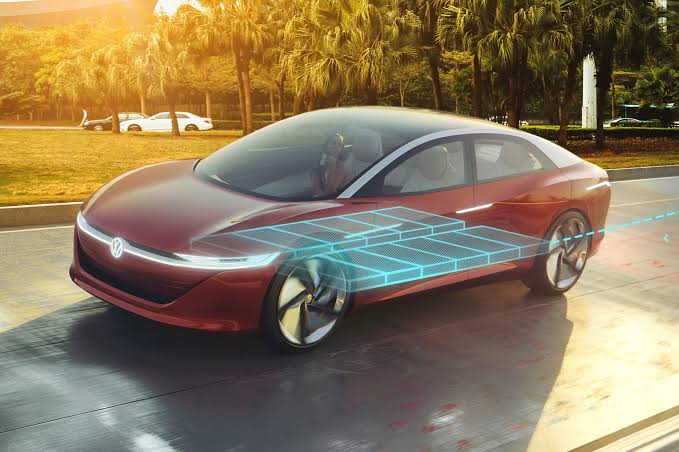
Solid-state batteries offer higher energy density than lithium-ion, meaning more energy can be stored in the same volume or the same energy can be stored in a smaller, lighter package. This directly affects the battery capacity figures that appear on the COC, and in most cases would increase the kWh figures for a given physical battery size.
Faster charging is a key promise of solid-state technology, with some developers claiming DC charging rates significantly higher than the fastest current lithium-ion systems. The COC currently records maximum AC and DC charging power in kilowatts. Solid-state vehicles would require updated entries in these fields, and the infrastructure implications of higher charging rates feed back into how the vehicle is classified for grid connection purposes in some regulatory frameworks.
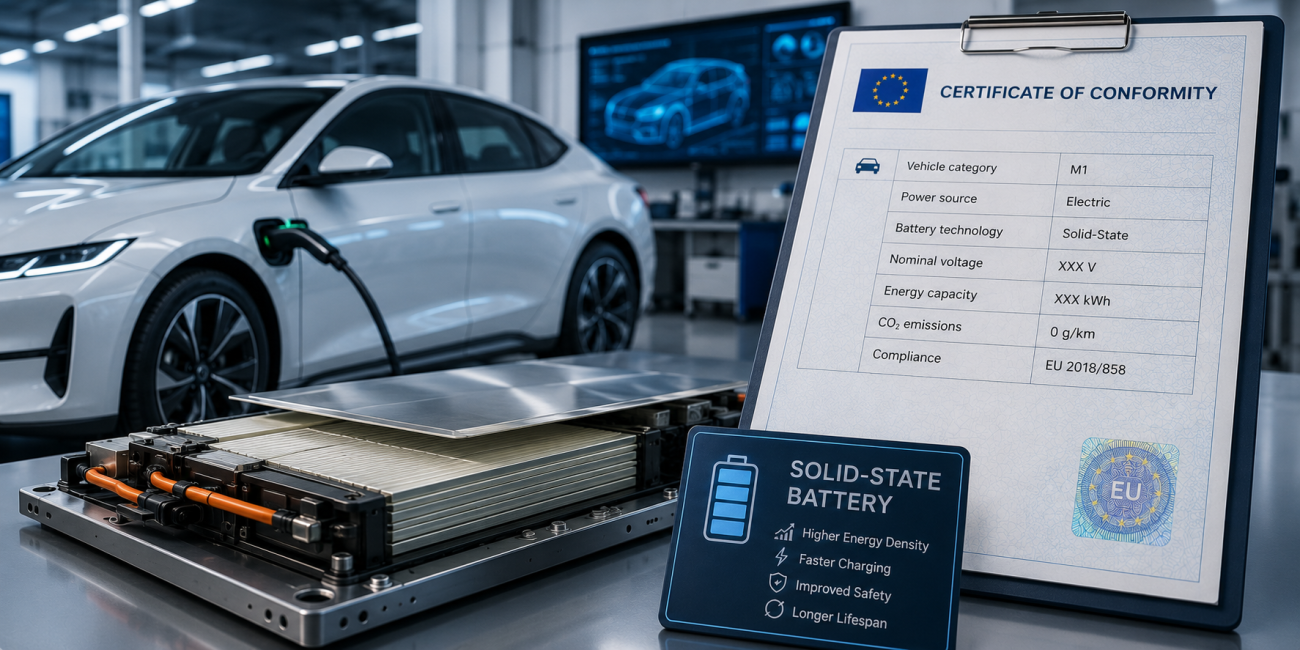
Improved thermal stability is a solid-state advantage that affects safety performance rather than the performance figures that directly populate COC fields. However, it feeds into the type approval testing protocols around thermal event management, which currently require lithium-ion specific testing procedures that would need revision for solid-state chemistry.
Extended operating temperature range, particularly in cold conditions, would change the relationship between WLTP-certified range and real-world range in a way that makes the COC figure more representative of actual driving conditions. This does not change what appears on the COC but changes how useful the figure is as a real-world predictor.
The Type Approval Challenge for New Battery Chemistry
The EU type approval framework for electric vehicles is built around a set of testing protocols that assume lithium-ion chemistry. The WLTP range test procedure, the battery durability requirements, the thermal management testing standards, and the safety testing protocols for battery packs all reflect the specific characteristics of lithium-ion cells.
Solid-state batteries have different failure modes, different thermal characteristics, and different degradation patterns than lithium-ion cells. A type approval process designed to validate lithium-ion safety and performance does not automatically validate solid-state safety and performance. This creates a regulatory challenge that the European Commission, the European Union Agency for the Automotive Industry, and national type approval authorities are already beginning to work through.
The practical implication for manufacturers seeking EU type approval for solid-state battery vehicles is that existing protocols may require supplementation with solid-state specific testing requirements. The timeline for developing and implementing these supplementary protocols will directly affect how quickly solid-state vehicles can receive EU type approval and therefore how quickly they can be legally sold across EU member states.
What Changes on the COC Document Itself
For buyers and registration authorities, the most directly relevant question is what the COC for a solid-state battery vehicle will look like compared to a current lithium-ion EV COC. Several fields will contain meaningfully different data.
Battery capacity figures will reflect the higher energy density of solid-state technology. Where a current mid-range EV might show 75 kWh of net battery capacity, a comparable solid-state vehicle might show 90 kWh or more in the same physical footprint. This change is straightforward to capture in existing COC fields without structural modification to the document format.
WLTP range figures will be higher for solid-state vehicles, reflecting both the increased energy storage and the improved cold-weather performance of solid-state chemistry. The WLTP test procedure itself may require updating to reflect the different thermal behaviour of solid-state batteries, which could mean that solid-state WLTP figures are generated through a slightly different protocol than current figures.
Maximum charging power figures will change significantly for solid-state vehicles that support higher DC charging rates. Current COC entries for DC charging power on leading lithium-ion EVs run to 150 to 350 kilowatts depending on the vehicle. Solid-state vehicles targeting charging rates significantly above this range would require COC entries outside the range that current registration processing systems are calibrated to expect. This is a practical data systems issue that registration authorities will need to address before the first high-rate solid-state chargers arrive in commercial vehicles.
Battery chemistry identification may become a new COC field if the EU type approval framework is updated to require explicit chemistry declaration. Currently the COC does not specify battery chemistry, only capacity and performance figures. As multiple battery chemistries coexist in the market, authorities and buyers may benefit from explicit chemistry identification that allows appropriate assessment of degradation characteristics and end-of-life handling requirements.
The Partial Solid-State Transition Period
One complication that buyers should anticipate is that the introduction of solid-state batteries is unlikely to happen as a clean switch. The more probable scenario is a transition period during which some vehicles use hybrid architectures combining solid-state and lithium-ion cells in the same battery pack, or during which different variants of the same model are available with either technology.
This creates COC complexity similar to the current situation with mild hybrids, full hybrids, and plug-in hybrids sharing model lines. The COC will need to distinguish between variants with different battery architectures even when the external appearance and model designation are identical. Buyers importing used vehicles from this transition period will need to pay particular attention to which battery architecture their specific vehicle contains, as the performance figures and degradation characteristics differ between architectures even within the same model.
What Buyers Can Do Now to Prepare
The most practical step for anyone planning to buy or import EVs over the next several years is to understand the current COC framework thoroughly before it changes. Buyers who understand what battery capacity, WLTP range, and charging power figures on a COC mean today will be better positioned to interpret equivalent figures on a solid-state COC when those vehicles enter the market.
Running a VIN check and COC verification through coc-auto.eu for any EV purchase establishes familiarity with current COC data fields and the cross-referencing process. The skills developed in verifying a current lithium-ion EV’s documentation transfer directly to verifying a future solid-state vehicle’s documentation, even as the specific figures and protocols evolve.
Official Certificates of Conformity
At Auto-COC.eu, we provide official manufacturer-issued Certificates of Conformity for over 90 brands including BMW, Mercedes, Volkswagen, Audi, Toyota, Renault, Peugeot, Ford, and many more.
📩 PDF via Email
📦 FedEx/UPS Post Delivery
⏱️ Fast processing & delivery