Blog
How to Register a Car in the Netherlands as a Foreigner - Full Guide for 2026
Whether you are coming from Germany, Belgium, France, the UK, or further afield, this guide gives you everything you need to complete your Dutch vehicle registration correctly and on time.
What you'll read:
The Netherlands is one of the most popular destinations in Europe for expats, international workers, and students relocating from other EU countries. If you are moving to the Netherlands and bringing your car with you, or if you have purchased a vehicle in another EU country and want to drive it legally on Dutch roads, you will need to register a car in the Netherlands as a foreigner.
The process is more involved than in many other EU countries, primarily because the Netherlands requires a physical RDW inspection for all imported vehicles and levies a CO2-based registration tax (BPM) that can be significant for conventional combustion engine cars.
Who Needs to Register a Car in the Netherlands as a Foreigner?
Not every foreigner driving in the Netherlands needs to immediately register their vehicle locally. The rules depend on your residency status and how long you plan to stay. If you are a tourist or on a short visit, you can drive on your home country plates for the duration of your stay without any obligation to register locally. If you are a student on a temporary programme of less than six months, the rules are similarly flexible.
However, if you are establishing permanent or long-term residency in the Netherlands, you are legally required to register a car in the Netherlands as a foreigner within one month of importing the vehicle or establishing your Dutch address, whichever comes first. This applies to EU citizens relocating for work, non-EU nationals with a Dutch residence permit, and anyone registering with the municipality (gemeentelijke basisadministratie or BRP). The one-month deadline is strictly enforced by the Dutch tax authority (Belastingdienst), and driving beyond it on foreign plates can result in fines, back-payment of BPM, and in serious cases, confiscation of the vehicle.

The Key Organisations Involved in Dutch Vehicle Registration
Before diving into the process, it helps to understand which Dutch organisations are involved when you register a car in the Netherlands as a foreigner, as each plays a distinct role:
- RDW (Rijksdienst voor het Wegverkeer): The Dutch Vehicle Authority. Responsible for vehicle inspections, type approval, and issuing the kentekenbewijs (registration certificate).
- Belastingdienst (Dutch Tax Authority): Responsible for calculating and collecting the BPM (private motor vehicle tax) before registration can proceed.
- Gemeente (Municipality): Where you register your address (BRP registration), which triggers the residency requirement to register your vehicle.
- APK Inspection Station: The approved centres where the mandatory vehicle roadworthiness inspection is carried out.
Documents You Need to Register a Car in the Netherlands as a Foreigner
Gathering your complete document set before you begin is essential. The most common reason Dutch vehicle registration applications fail or are delayed is missing or incomplete documentation. You will need all of the following to register a car in the Netherlands as a foreigner:
✓
Certificate of Conformity (COC)
Mandatory for all EU vehicle imports. The RDW uses the COC to verify technical specifications. Without it, the inspection cannot proceed. Order via Auto-COC.eu if missing.
✓
Original Foreign Registration Certificate
Both parts if applicable (e.g., German Zulassungsbescheinigung Teil I and Teil II).
✓
Proof of Ownership
Purchase invoice, notarised transfer document, or lender release letter if the vehicle is financed.
✓
Valid Passport or National Identity Card
Required for identity verification at the RDW inspection station.
✓
Proof of Dutch Address (BRP registration)
Your municipality registration confirmation showing your current Dutch residential address.
✓
Proof of Dutch Insurance
A Dutch insurance certificate (groene kaart) must be obtained before the registration is finalized.
✓
BSN Number (Burgerservicenummer)
Your Dutch citizen service number. Required for all official government transactions, including vehicle registration.
✓
Payment Method for BPM
The BPM must be paid to the Belastingdienst via their online portal before or at the time of registration.
The Certificate of Conformity deserves special attention. It is the document most frequently missing from foreign vehicle imports and the one that most commonly delays or blocks the entire registration process. If you do not have your original COC, order a replacement from Auto-COC.eu before beginning any other steps. The COC is brand-specific and must match your vehicle’s VIN exactly.
Official Certificates of Conformity
At Auto-COC.eu, we provide official manufacturer-issued Certificates of Conformity for over 90 brands including BMW, Mercedes, Volkswagen, Audi, Toyota, Renault, Peugeot, Ford, and many more.
📩 PDF via Email
📦 FedEx/UPS Post Delivery
⏱️ Fast processing & delivery
Step-by-Step Process to Register a Car in the Netherlands as a Foreigner
Step 1: Register Your Address with the Municipality (Gemeente)
Before you can register a car in the Netherlands as a foreigner, you must first register your Dutch address at your local gemeente. This gives you your BSN number, which is required for all subsequent steps. Bring your passport, proof of address (rental contract or property deed), and any relevant visa or residence permit documentation. Most municipalities can process address registrations within a few days of your appointment.
Step 2: Obtain Dutch Insurance
Dutch law requires that your vehicle be insured under a Dutch insurance policy before it can be registered. Contact a Dutch insurer and arrange at least third-party liability (WA verzekering) coverage for the vehicle. Most Dutch insurers can provide coverage for foreign-plated vehicles on a temporary basis while registration is pending. You will receive a verzekeringskaart (insurance card) which you will need for the RDW inspection and registration application.
Step 3: Gather Your Documents Including the COC
Confirm you have your Certificate of Conformity. If you do not have it, order it from Auto-COC.eu now. The COC processing time is up to 15 business days, and nothing else can proceed until you have it. While waiting for your COC, prepare all other documents: foreign registration certificate, proof of ownership, BSN confirmation, and insurance certificate.
Step 4: Calculate and Pay Your BPM
The BPM (Belasting van personenauto’s en motorrijwielen) is a one-off registration tax calculated primarily on the vehicle’s CO2 emissions as stated on the Certificate of Conformity. You must calculate your BPM using the official Belastingdienst BPM calculator and submit a BPM declaration (BPM aangifte) online before or at the time of registration. Payment is made online by bank transfer.
For electric vehicles, the BPM is significantly reduced. For conventional petrol or diesel vehicles, BPM can range from a few hundred euros for low-emission cars to tens of thousands of euros for larger SUVs and high-emission vehicles. The exact figure depends on the CO2 g/km figure shown on your COC, which is why having the correct COC before calculating BPM is so important.
Step 5: Book an RDW Inspection
All imported vehicles must undergo a physical inspection at an RDW-approved centre before registration can be completed. This inspection verifies the vehicle’s identity against the COC data, checks the vehicle’s roadworthiness, and confirms that it meets Dutch and EU standards. You can book an RDW inspection appointment online at rdw.nl. Bring your COC, foreign registration certificate, and proof of ownership to the inspection.
RDW inspection availability varies by location and season. In major cities like Amsterdam, Rotterdam, and The Hague, appointments are typically available within one to two weeks. In smaller towns, availability can sometimes be sooner. The inspection itself takes approximately 30 to 60 minutes.
Step 6: Complete the Registration Application
Once your RDW inspection is passed and your BPM is paid, your vehicle can be officially registered in the Netherlands. The RDW will assign a Dutch registration number (kenteken) and issue a kentekenbewijs (registration certificate). This document arrives by post within three to five business days. At this point, you can replace your foreign plates with Dutch plates, which you can order from any authorized plate manufacturer (kentekenplaatmaker) on presentation of your kentekenbewijs.
Step 7: Deregister Your Vehicle in the Home Country
Once Dutch registration is complete, notify your home country’s registration authority to cancel (deregister) the vehicle’s original registration. In Germany this is done through the Zulassungsstelle, in France through ANTS, and in Belgium through the DIV. Failure to deregister in your home country can result in continued road tax obligations and insurance complications there.
Understanding BPM: The Dutch Registration Tax
BPM is the most financially significant aspect of registering a car in the Netherlands as a foreigner, particularly for drivers of conventional combustion engine vehicles. It is a one-off tax paid at the time of first registration in the Netherlands and is calculated primarily on CO2 emissions, with additional factors including the vehicle’s age and its original Dutch list price (if applicable).
The BPM calculation for imported vehicles uses the following formula: the standard BPM for a new equivalent vehicle is determined based on CO2 emissions, then reduced based on the vehicle’s age using a depreciation table published annually by the Belastingdienst. The older the vehicle, the lower the BPM, but for relatively new vehicles (under five years old), the BPM can still be substantial.
🇳🇱 2026 Indicative BPM Guide (Two-Year-Old Vehicle)
The following estimated rates apply to passenger vehicles imported into the Netherlands based on 2026 tax brackets.
| CO₂ Level (g/km) | Estimated BPM Cost | Rating |
|---|---|---|
| Under 79 g/km | €0 – €500 | Very Low |
| 80 to 100 g/km | €500 – €2,000 | Low |
| 101 to 130 g/km | €2,000 – €6,000 | Moderate |
| 131 to 160 g/km | €6,000 – €12,000 | High |
| 161 to 200 g/km | €12,000 – €20,000 | Very High |
| Over 200 g/km | €20,000+ | Extreme |
Pro Tip: These figures are indicative for used vehicles. To get the exact CO₂ figure for your specific model, check Box V.7 on your Certificate of Conformity. If you don't have it, order one from Auto-COC.eu before your RDW inspection.
These figures illustrate why the exact CO2 figure on your Certificate of Conformity is so critically important. A difference of 10 g/km in the 130 to 160 g/km range can mean a BPM difference of 2,000 to 4,000 euros. Always verify your vehicle’s exact CO2 figure from the COC before calculating your BPM, and never rely on published averages for your model as different engine variants and equipment levels can produce different CO2 figures.
The RDW Inspection: What to Expect
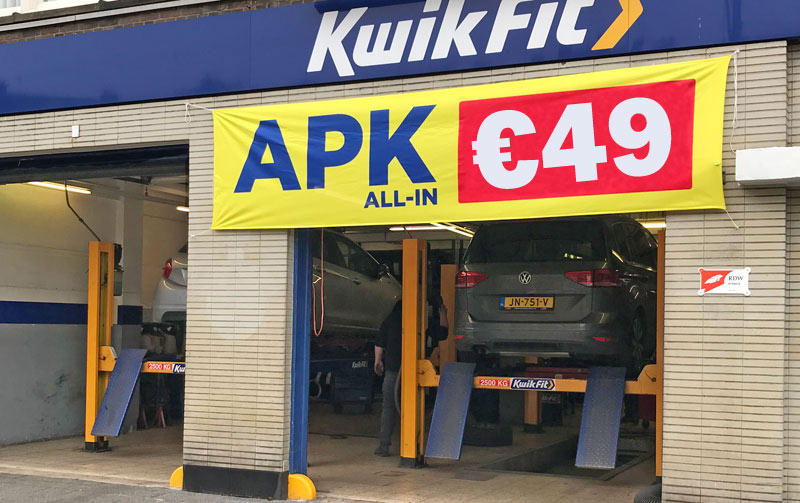
The RDW inspection is a physical examination of your vehicle carried out at one of the RDW’s approved inspection centres across the Netherlands. It is a mandatory step when you register a car in the Netherlands as a foreigner, and unlike the APK (periodic roadworthiness inspection), it is specifically designed for vehicles being registered for the first time in the Dutch system.
During the RDW inspection, the inspector will check the following:
- VIN verification: The VIN on the vehicle (dashboard plate, door frame, engine bay) is matched against the COC and the foreign registration certificate.
- Technical specification check: The vehicle’s key specifications (engine type, dimensions, weight, emissions) are verified against the COC data.
- Roadworthiness check: Brakes, lights, tyres, steering, and other safety systems are inspected.
- Odometer reading: The current mileage is recorded.
- Vehicle identification numbers on body panels: On some vehicles, body panels carry stamped identification numbers that are also verified.
If the vehicle passes the inspection, the RDW will approve the registration. If it fails, you will receive a list of items to rectify, and you can rebook after repairs are completed.
⚠️ Common Failure Reasons: Lighting alignment (headlights set for left-hand traffic), tyre condition, and brake performance.
📋 Bring to Your RDW Appointment:
Certificate of Conformity (original or certified copy)
Original foreign registration certificate
Proof of ownership (purchase invoice)
Your BSN number
Valid ID
Costs: What to Budget When Registering a Car in the Netherlands
Understanding the full cost breakdown will help you plan accurately when you register a car in the Netherlands as a foreigner. The total cost depends significantly on your vehicle’s CO2 emissions and age, but here is a realistic breakdown for a typical mid-range vehicle:
- BPM (registration tax): 0 to 20,000 euros or more depending on CO2 and vehicle age
- RDW inspection fee: approximately 50 to 100 euros
- APK inspection (if vehicle is over 4 years old): approximately 50 to 80 euros
- Dutch number plates: approximately 20 to 50 euros from a kentekenplaatmaker
- Certificate of Conformity (if missing): 50 to 315 euros depending on brand
- Administration fee for kentekenbewijs: approximately 10 euros
- Dutch insurance (annual): varies by vehicle and driver profile
For electric vehicles, the BPM component is dramatically lower, making the total registration cost for an EV potentially under 500 euros even for newer, higher-value vehicles.
Common Mistakes to Avoid When Registering a Car in the Netherlands
Registering a car in the Netherlands as a foreigner is a process with several potential pitfalls. The following are the most common mistakes made by expats and foreign nationals:
!
Starting without the COC
The single most common and costly mistake. The RDW inspection cannot proceed without a valid COC. Order it from Auto-COC.eu first before taking any other steps.
!
Using the wrong CO₂ figure for BPM calculation
Always use the figure from your vehicle's specific COC (Box V.7), not the general model stats. Different variants can have significantly different CO₂ ratings.
!
Missing the one-month registration deadline
The Belastingdienst takes deadline compliance seriously. Late registration can result in fines and penalty interest on the BPM owed.
!
Not registering your address with the gemeente first
You cannot obtain a BSN number without municipality registration, and you cannot complete vehicle registration without a BSN. This step must come first.
!
Assuming your home country insurance covers you
While EU policies provide basic cross-border cover, you must arrange Dutch insurance before the RDW inspection and registration application.
!
Forgetting to deregister in your home country
Leaving your vehicle registered elsewhere while it is also registered in the Netherlands creates tax and insurance complications in both countries.
Frequently Asked Questions
The realistic timeline is three to six weeks. The longest steps are obtaining the COC (up to 15 business days) and booking the RDW inspection (1–2 weeks). Once the inspection is passed and BPM is paid, your plates arrive in 3–5 business days. We recommend ordering your COC before starting any other steps.
Yes. You must be registered at a Dutch address with your municipality (gemeente) and have a BSN number before you can register a vehicle. The BSN is required for the BPM declaration and all official documents. Registering with the gemeente should be your very first step.
BPM is the private motor vehicle registration tax, calculated based on CO₂ emissions found on your COC. For electric vehicles, BPM can be near zero. For petrol/diesel cars emitting over 130 g/km, it can range from €2,000 to over €20,000. Always check your exact CO₂ figure in Box V.7 of your COC for an accurate estimate.
No. The Certificate of Conformity is mandatory. The RDW cannot conduct the inspection and the tax authorities cannot calculate BPM without it. If you are missing yours, Auto-COC.eu provides official replacements for over 90 brands as a PDF and original paper document.
The RDW inspection is for initial import registration. A separate APK (roadworthiness) inspection is required every 1–2 years. If your vehicle is more than four years old, the APK is usually required at the time of the RDW inspection. Newer vehicles typically only need the RDW inspection initially.
You will receive a report listing the items to rectify. Common failures include headlight alignment (for RHD cars), tyre tread, and brakes. Once repaired, you can rebook a follow-up inspection. Most failures are minor and inexpensive to fix, allowing the registration to proceed shortly after.
The Bottom Line
Registering a car in the Netherlands as a foreigner is a multi-step process that requires careful preparation and attention to the correct sequence of steps. The key to a smooth registration is simple: start with the Certificate of Conformity, book your RDW inspection early, calculate your BPM accurately using the CO2 figure from your COC, and meet the one-month registration deadline from the date you establish Dutch residency.
At Auto-COC.eu, we help thousands of people across Europe obtain the official Certificate of Conformity they need to complete vehicle registrations. For all major brands including BMW, Mercedes, Volkswagen, Audi, Toyota, Renault, and over 90 others, we provide manufacturer-issued COC documents at the best price online, with free delivery across the EU and/or a PDF sent to your email. Order your COC today and start your Dutch registration on the right foot.
Official Certificates of Conformity
At Auto-COC.eu, we provide official manufacturer-issued Certificates of Conformity for over 90 brands including BMW, Mercedes, Volkswagen, Audi, Toyota, Renault, Peugeot, Ford, and many more.
📩 PDF via Email
📦 FedEx/UPS Post Delivery
⏱️ Fast processing & delivery