Blog
7 Reasons Your Car Registration Was Rejected — And How to Fix Them
What you'll read:
You’ve done everything right. You shipped the car, paid the import duties, booked the technical inspection — and then the registration authority sends your application back rejected. No plates. No registration certificate. Just a letter listing documents or conditions you didn’t know were required.
It’s one of the most frustrating experiences in the vehicle import process, and it happens far more often than it should. The good news is that most rejections are fixable. The bad news is that each day your car sits unregistered costs you time, money, and patience.
Here are the seven most common reasons vehicle registration applications get rejected across EU member states — and exactly what to do to resolve each one.
1. Missing Certificate of Conformity (COC)
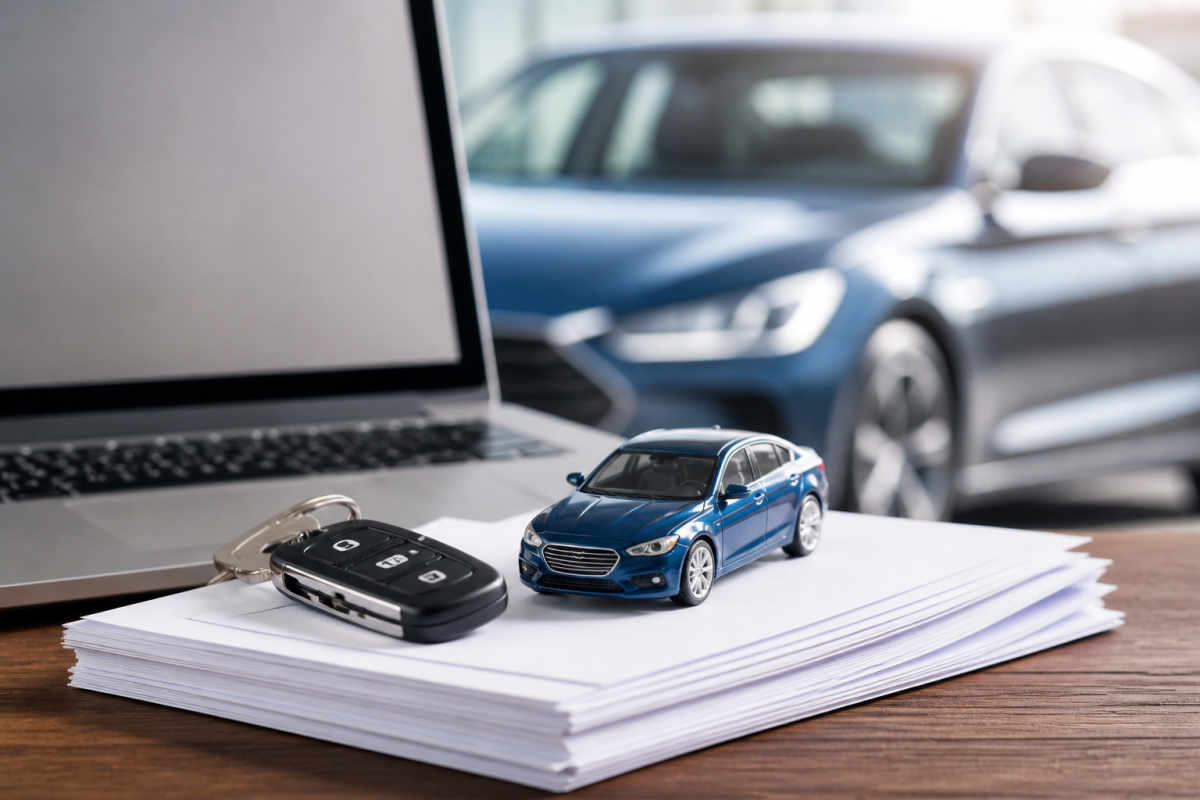
This is the single most common reason for registration rejection across the EU, and it catches thousands of vehicle owners off guard every year.
The Certificate of Conformity is an official document issued by the vehicle’s manufacturer, certifying that your specific car was built in compliance with EU type-approval standards. Without it, registration authorities cannot verify the vehicle’s technical specifications, emissions classification, or legal compliance — and they won’t process the application.
Many buyers discover the COC is missing only when they arrive at the registration office. It may have been lost by a previous owner, never issued with a grey import, separated from the vehicle during a dealer transaction, or simply forgotten by everyone involved in the sale.
How to fix it: Obtain a replacement COC as quickly as possible. Contacting the manufacturer directly can take weeks, and results are not guaranteed for older models. The fastest route is through a specialist retrieval service — coc-auto.euallows you to request your official Certificate of Conformity online using your VIN, with delivery handled digitally so you can resubmit your registration application without unnecessary delays.
Order COC Online Now — auto-coc.eu
The fastest, most affordable way to get your Certificate of Conformity in 2026.
- ✔ Prices from EUR 49 — up to 6x cheaper than an authorised dealer
- ✔ Digital delivery in 24–48 hours for most vehicles
- ✔ Documents sourced directly from official manufacturer databases
- ✔ Accepted by registration authorities across all EU member states
- ✔ Available 24/7 — order any time, from any device
- ✔ Free VIN check before you pay — no risk, no guesswork
Visit: www.auto-coc.eu
2. Incorrect or Incomplete Customs Clearance Documentation
For vehicles imported from outside the EU — including the UK post-Brexit — registration authorities require proof that the vehicle has been legally cleared through customs and that all applicable duties and import VAT have been paid.
The key document is the Single Administrative Document (SAD), known as the DUA in Spain or the DAU in other member states. If this document is missing, incomplete, or contains errors — such as an incorrect VIN, an inaccurate declared value, or missing customs office stamps — the registration will be rejected.
How to fix it
Return to your customs agent or freight forwarder and request a corrected or reissued SAD. If customs duties were underdeclared and the discrepancy has been flagged, you may need to settle the outstanding amount before the document can be corrected. Always work with a licensed customs broker when importing a vehicle from outside the EU — the cost of their service is minimal compared to the delays caused by documentation errors.
3. Failed or Missing Technical Inspection (ITV/TÜV/CT)
Every EU member state requires imported vehicles to pass a national roadworthiness inspection before registration. In Spain this is the ITV, in Germany the TÜV or DEKRA inspection, in France the Contrôle Technique, and so on. If the vehicle has not been inspected, or if it failed the inspection, the registration application will be rejected.
Common reasons for failing the inspection include:
- Worn brakes or tyres below the legal minimum tread depth
- Non-compliant lighting (particularly relevant for right-hand drive UK vehicles in continental Europe, where beam deflection or headlight replacement may be required)
- Emissions levels exceeding permitted thresholds
- Structural issues identified during the visual inspection
- Modifications that deviate from the original manufacturer specifications
How to fix it
Address the specific failures identified in the inspection report and book a re-inspection. For UK right-hand drive vehicles, have the headlights adjusted or replaced for left-hand traffic before the inspection — this is one of the most predictable and preventable causes of failure.
4. Discrepancy Between the COC and the Vehicle
Even when a COC is present, registration can be rejected if the details on the document don’t match the physical vehicle or other documentation. Common discrepancies include:
- VIN on the COC not matching the VIN plate on the vehicle
- Engine specification on the COC not matching the declared engine
- Colour code mismatch (less common but occasionally flagged)
- COC issued for a different market variant of the same model
This can happen when the wrong COC was retrieved, when a vehicle has undergone undisclosed modifications, or when a previous owner substituted documentation from a similar model.
How to fix it
If the VIN is correct and the discrepancy is a data entry error on the COC, request a corrected document through coc-auto.eu. If the vehicle has been modified in ways that deviate from its original specification, you may need to pursue individual technical approval for the modified configuration — a more complex process that requires specialist assessment.
5. Proof of Ownership Issues
Registration authorities need to be satisfied that the applicant is the legal owner of the vehicle. Ownership disputes, incomplete title transfers, or documentation that doesn’t clearly trace the chain of ownership from the original registration to the current owner can all result in rejection.
Common problems include:
- A bill of sale that doesn’t match the name on the original title
- A title document from the country of origin that hasn’t been properly translated or apostilled
- Missing documentation for intermediate sales (for example, a vehicle that changed hands twice before reaching the current owner, with only the first and last transaction documented)
- Outstanding finance or a lien recorded against the vehicle in the country of origin
How to fix it
Obtain certified translations of all foreign-language ownership documents and have them apostilled if required by your destination country. For vehicles with complex ownership histories, work with a local gestor or administrative agent who specialises in vehicle imports to ensure the chain of title is properly documented. Run a vehicle history check against the country of origin’s database to identify any outstanding finance before the problem surfaces at the registration office.
Get a Full carVertical Report
The same comprehensive data. A better price — exclusively through COC-Auto.
€29.99
€19.99
SAVE €10
Accidents • Mileage fraud • Theft • Finance • Write-offs • Full history
Check Your VIN Now →
6. Unpaid or Incorrectly Calculated Registration Tax
Most EU member states impose a vehicle registration tax in addition to customs duty and import VAT. In Spain, this is the Impuesto Especial sobre Determinados Medios de Transporte, calculated based on CO₂ emissions. In other countries, the tax may be based on engine displacement, vehicle age, or declared value.
If the tax has not been paid, has been calculated on incorrect figures, or if the supporting documentation (such as the emissions data from the COC) doesn’t align with the tax declaration, the registration will be rejected or suspended pending payment.
How to fix it
Obtain the correct CO₂ emissions figure and other relevant technical data from the COC and recalculate the registration tax using the official formula for your destination country. Pay any outstanding balance through the relevant tax authority before resubmitting the registration application. If you’re unsure of the calculation, consult a local tax advisor or gestor who handles vehicle registrations regularly.
7. Application Submitted to the Wrong Authority or Office
This one sounds trivial, but it causes genuine delays — particularly for expats unfamiliar with the administrative structure of their new country. Vehicle registration in the EU is handled at different administrative levels depending on the member state:
- In Spain, applications go to the provincial DGT office corresponding to the applicant’s registered address
- In Germany, the Zulassungsstelle is organised at the district (Kreis) level
- In France, the Système d’Immatriculation des Véhicules (SIV) process is largely centralised online, but errors in the online system can still result in rejection
- In Italy, registration is handled through the Motorizzazione Civile and the local ACI (Automobile Club d’Italia) office
Submitting to the wrong office, using an outdated form, or failing to follow the correct procedure for your specific residency status can result in an application being returned without being processed.
How to fix it
Verify the correct procedure for your specific region and residency status before submitting. Many expats find it significantly easier and faster to appoint a local gestor or administrative agent to handle the submission on their behalf — the fee is usually modest and the reduction in errors and delays more than justifies the cost.
The Bottom Line
A rejected registration application is not the end of the road. Every one of the issues listed above is resolvable — some within days, others requiring a few weeks of follow-up. The key is identifying the exact reason for rejection from the authority’s written decision, addressing that specific issue methodically, and resubmitting a complete and accurate application.
Get the documentation right, and the rest of the process follows.
Official Certificates of Conformity
At Auto-COC.eu, we provide official manufacturer-issued Certificates of Conformity for over 90 brands including BMW, Mercedes, Volkswagen, Audi, Toyota, Renault, Peugeot, Ford, and many more.
📩 PDF via Email
📦 FedEx/UPS Post Delivery
⏱️ Fast processing & delivery