Blog
Why Some Cars Cannot Be Registered in Another EU Country
Understanding why some cars cannot be registered is critical before making a purchase. These car registration EU problems can lead to delays, additional costs, or even a complete inability to register the vehicle. In the worst cases, buyers are left with a car they legally own but cannot use on public roads.
What you'll read:
The myth of “free movement” for vehicles in the EU
One of the biggest misconceptions is that EU rules guarantee full compatibility for vehicle registration across all member states. While the EU harmonizes many regulations, individual countries still maintain their own administrative procedures and technical requirements. This is where many car registration EU problems begin.
In practice, this means that a car perfectly legal in one country may not meet the exact administrative or technical standards required in another. Differences in emissions standards, documentation formats, or inspection rules can all create car registration EU problems that buyers did not anticipate.
These differences often appear only during registration:
- Authorities request additional documents
- Technical specifications are missing or unclear
- Local standards differ from the country of origin
- Previous modifications are not accepted
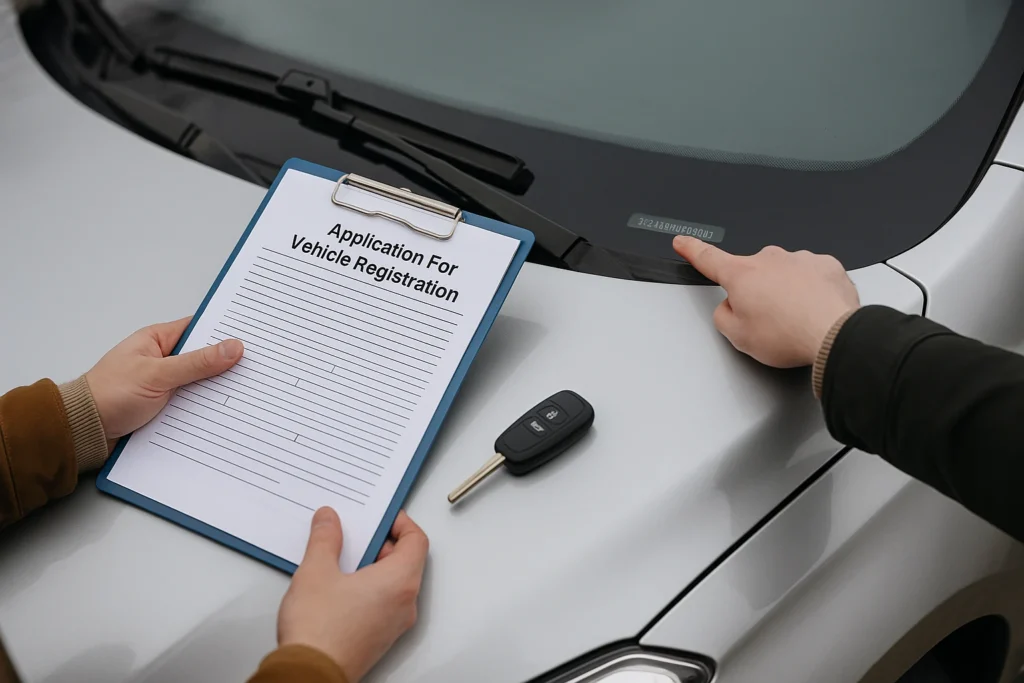
Missing or incomplete documentation
One of the most common causes of car registration EU problems is incomplete or incorrect documentation. Even if the vehicle itself is technically sound, missing paperwork can block the entire registration process.
Authorities require clear proof of ownership, previous registration, and technical compliance. If any of these elements are missing, inconsistent, or poorly documented, the process can stop immediately. This is one of the simplest yet most frequent sources of car registration EU problems.
Typical documentation issues include:
- Missing original registration certificate
- Incomplete sale contract or invoice
- Mismatched VIN numbers across documents
- Lack of proof of VAT status
- Documents not translated where required
- Missing stamps or official validation
- Incorrect ownership history
- Lost or damaged paperwork
Instant History Check
Buy a car the right way with a carVertical instant report
✓
Pay less: complete VIN report for 19,99 € instead of 29,99 €
✓
No ongoing plan, you pay only when you actually need a report
⚡
Digital delivery: report generated in a few minutes after payment
Order Your carVertical Check Now
Limited offer:
Only 19.99€
Only 19.99€
Lack of Certificate of Conformity (COC)
Another major source of car registration EU problems is the absence of a Certificate of Conformity. This document proves that the vehicle meets EU standards and can be registered across member states without additional technical validation.
Without a COC, authorities often lack the standardized data needed to approve the vehicle quickly. This leads to additional procedures such as individual homologation, which is more complex and expensive. As a result, the absence of a COC is one of the most critical triggers of car registration EU problems.
In practical terms, not having a COC can lead to:
- Additional technical inspections
- Requests for manufacturer documentation
- Delays in approval
- Increased administrative costs
Many buyers underestimate this risk, only realizing its importance when facing registration difficulties.
Technical non-compliance with local standards
Even within the EU, technical standards are not always perfectly aligned. Vehicles may comply with general EU regulations but still fail to meet specific national requirements. This creates another layer of car registration EU problems.
For example, lighting systems, emissions standards, or safety features may differ slightly between countries. These differences are often minor but enough to require modifications or additional inspections before registration is approved.
Common technical reasons for car registration EU problems:
- Non-compliant headlights or lighting systems
- Emissions standards not matching local requirements
- Modified exhaust systems
- Aftermarket tuning or performance changes
- Non-standard tires or wheels
- Missing safety features
- Differences in speedometer units
- Incomplete technical data
These issues can often be resolved, but they add cost and complexity.
Official Certificates of Conformity
At Auto-COC.eu, we provide official manufacturer-issued Certificates of Conformity for over 90 brands including BMW, Mercedes, Volkswagen, Audi, Toyota, Renault, Peugeot, Ford, and many more.
📩 PDF via Email
📦 FedEx/UPS Post Delivery
⏱️ Fast processing & delivery
Vehicles imported from outside the EU
Cars originally imported from outside the EU are significantly more likely to face car registration EU problems. Even if they are already registered in one EU country, their original non-EU specifications can create complications.
These vehicles may lack full EU type approval or have specifications that differ from EU standards. This requires additional verification and sometimes extensive modifications, making the registration process more difficult.
Challenges include:
- Lack of EU homologation
- Different safety standards
- Non-standard emissions systems
- Limited availability of technical documentation
Because of this, buyers should be particularly cautious when dealing with vehicles that have a non-EU origin.
Financial and legal issues attached to the vehicle
Not all car registration EU problems are technical or administrative. Some are legal or financial in nature, and these can be even more serious. A vehicle may have outstanding loans, leasing agreements, or even be reported stolen.
In such cases, registration can be blocked until the issue is resolved. This can lead to lengthy legal processes and significant financial loss. Many buyers are unaware of these risks until it is too late, making this one of the most dangerous categories of car registration EU problems.
Typical legal issues include:
- Outstanding leasing contracts
- Unpaid loans or financial liens
- Stolen vehicle records
- Ownership disputes
- Incorrect registration history
- Fraudulent sale documents
- Cross-border legal inconsistencies
- Unresolved insurance claims
How to avoid car registration EU problems
Avoiding car registration EU problems requires preparation and attention to detail. Most issues can be prevented by verifying the vehicle and its documentation before purchase.
A structured approach significantly reduces risk and ensures a smoother registration process. Buyers who take the time to check everything upfront rarely encounter major car registration EU problems.
Key steps to avoid issues:
- Verify all documents before purchase
- Ensure the vehicle has a valid COC
- Check technical compliance
- Perform a VIN check
- Confirm ownership and legal status
- Understand local registration requirements
- Avoid heavily modified vehicles
- Choose reliable sellers
Frequently Asked Questions
What are the most common car registration EU problems?
The most common car registration EU problems include missing documents, lack of COC, technical non-compliance, and legal issues such as unpaid loans.
Can all cars be registered in any EU country?
No, not all cars can be registered easily. Car registration EU problems may arise if the vehicle does not meet specific local technical or environmental requirements.
Does a COC prevent car registration EU problems?
Yes, having a COC significantly reduces car registration EU problems by providing undisputed proof of compliance with EU-wide standards.
Are imported cars more likely to have car registration EU problems?
Yes, imported cars—especially those from outside the EU—are statistically more likely to face complex car registration EU problems during the validation process.
How can I avoid car registration EU problems?
You can avoid car registration EU problems by meticulously checking documents, verifying the VIN history, and ensuring technical compliance before finalizing any purchase.
Do legal issues cause car registration EU problems?
Yes, financial or legal issues such as active leasing contracts, theft records, or export bans are major causes of car registration EU problems.
The Bottom Line
While the EU offers many advantages for vehicle trade, car registration EU problems remain a real and often underestimated challenge. These issues arise from a combination of administrative, technical, and legal factors that vary between countries.
The good news is that most car registration EU problems can be avoided with proper planning. By understanding the risks and taking the right precautions, buyers can navigate the process successfully and avoid costly mistakes.
Official Certificates of Conformity
At Auto-COC.eu, we provide official manufacturer-issued Certificates of Conformity for over 90 brands including BMW, Mercedes, Volkswagen, Audi, Toyota, Renault, Peugeot, Ford, and many more.
📩 PDF via Email
📦 FedEx/UPS Post Delivery
⏱️ Fast processing & delivery